✓ UpdatedPrices last updated May 2026 — sourced from official Bulalo Capital Philippines channels
🍲 Bulalo Specialist
Bulalo Capital Menu with Prices
20+
Categories
14+
Bulalo Variants
₱35
Starts From
2026
Updated
Looking for the complete Bulalo Capital Philippines menu with prices? You’ve come to the right place. We’ve compiled the full 2026 Bulalo Capital menu with updated prices across all 20+ categories — sourced directly from official Bulalo Capital Philippines channels.
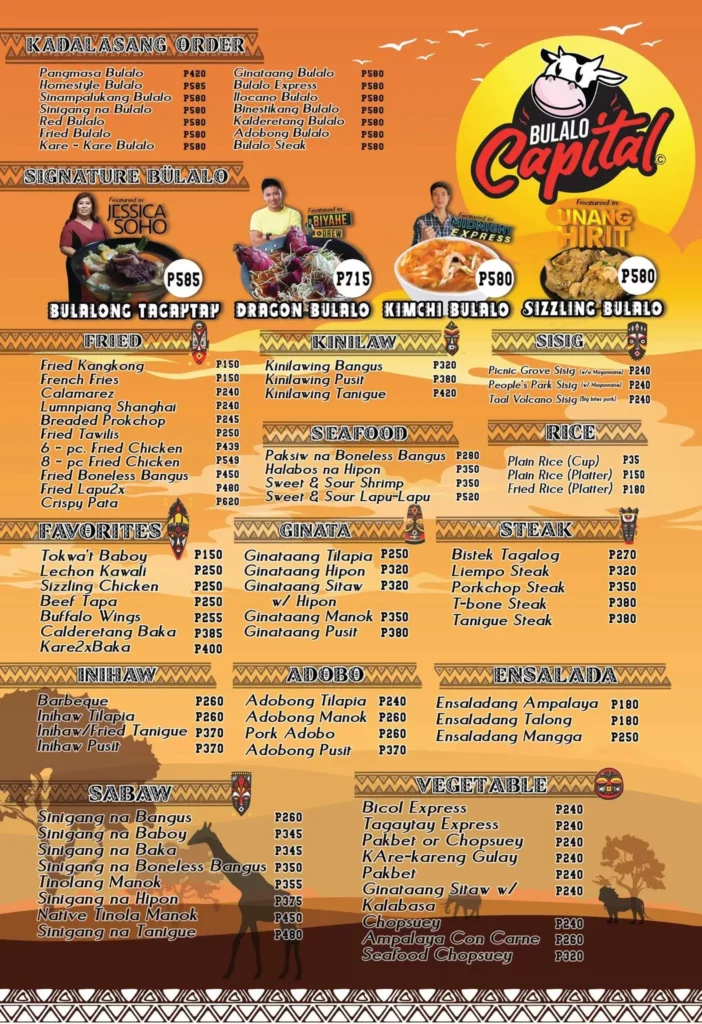
Bulalo Capital is one of the Philippines’ most comprehensive bulalo restaurants — with 14 bulalo variants in the Kadalasang Order section alone, covering every Filipino cooking tradition applied to the bone-marrow beef shank: classic Home Style Bulalo (₱638), Sinigang na Bulalo (₱528), Sinampalukang Bulalo (₱611), Kare Kare Bulalo (₱638), Kalderetang Bulalo (₱638), Adobong Bulalo (₱605), Ginataang Bulalo (₱572), and the signature Dragon Bulalo (₱787). Beyond bulalo, the menu covers Fried Capital, Inihaw, Sabaw Capital, Sisig, Kinilaw, Steak, Panciteria, Adobo, Seafood, Salads, Ginata, Vegetables, Barkada & Pamilya Packages, and Beverages including Beer and Whiskey.
Prices range from ₱35 (Plain Rice) to ₱6,589 (Set D Package). Scroll down for the complete updated menu.
Bulalo is a Filipino beef shank and bone marrow soup — the defining dish of Tagaytay and Batangas, where the cool highland climate makes hot, rich bone broth the most natural comfort food. The bone marrow is the most prized element: it melts into the broth during slow simmering, creating the signature deep richness no other soup achieves. Home Style Bulalo (₱638) — the classic version; clear, rich bone marrow broth. Sinampalukang Bulalo (₱611) — Bulalo with tamarind leaves (sampalok) for a gentle sourness; different from Sinigang. Sinigang na Bulalo (₱528) — the sour tamarind soup format applied to beef shank. Kare Kare Bulalo (₱638) — bone marrow shank in peanut sauce with bagoong. Dragon Bulalo (₱787) — the spiciest and most premium signature variant. Kimchi Bulalo (₱440) — Korean-Filipino fusion. Ginataang Bulalo (₱572) — coconut milk base.
The dish that defines Bulalo Capital’s identity — classic Filipino beef shank and bone marrow soup in a clear, rich broth slow-simmered for hours until the collagen from the bone and tendon fully dissolves into the liquid, creating a deep, lip-coating richness that cannot be replicated with quick cooking. Bulalo is Tagaytay’s most iconic dish precisely because the cool highland climate — Tagaytay sits at roughly 700 meters above sea level — makes a piping hot, bone-rich broth the most satisfying meal possible. The bone marrow, scooped directly from the shank bone with a small spoon, is the most prized element: it melts like butter on the tongue and is the primary reason bulalo diners from Manila make the two-hour drive to Tagaytay specifically for this dish.
Dragon Bulalo
₱ 787.00
The most premium and most daring variant in the Signature Bulalo section — the Dragon Bulalo is Bulalo Capital’s spiciest bulalo, combining the classic bone marrow beef shank broth with a chili-heat element that adds a slow-building, warming spice to every sip. At ₱787, the highest-priced bulalo on the menu and the one most regulars order on return visits once they’ve established their baseline with the Home Style. The Dragon Bulalo is best understood as the Home Style Bulalo elevated for diners who want the richness of bone marrow broth with an added dimension of heat — the spice blooms through the fat in the broth in a way it doesn’t in a clear, non-fatty soup base.
Kare Kare Bulalo
₱ 638.00
Bulalo Capital’s most uniquely Filipino fusion — the bone marrow beef shank cooked in Kare Kare’s signature peanut-based sauce instead of the standard clear broth, served with bagoong (fermented shrimp paste) on the side. Kare Kare is traditionally made with oxtail — using bulalo shank instead introduces the bone marrow element into a dish that already has deep, rich peanut sauce, creating a double-richness that makes this the most intensely flavored bulalo on the menu. The bagoong contrast (salty, funky, sharp) against the sweet peanut sauce and rich bone marrow is the textbook example of the Filipino flavor principle of pairing rich dishes with strongly flavored condiments.
Crispy Pata
₱ 638.00
The most popular non-bulalo item at Bulalo Capital — a whole pork leg (pata) slow-boiled until the meat is tender and the collagen has softened, then deep-fried until the skin becomes a shatteringly crispy crackling shell while the interior remains fall-off-the-bone tender. Crispy Pata is a two-stage preparation: the initial boiling is as important as the frying — under-boiled pata will not achieve the right interior tenderness no matter how long it’s fried. At Bulalo Capital, the Crispy Pata is ordered by tables that want a contrast to the soup-heavy bulalo menu — the dry, crackling pata skin provides the textural opposite of the soup broth, making it the ideal side dish to a bulalo order.
Sinampalukang Bulalo
₱ 611.00
The most distinctly different sour bulalo variant — Sinampalukang Bulalo uses tamarind leaves (dahon ng sampalok) rather than tamarind fruit pulp to create its sour note, producing a gentler, more herbal sourness than Sinigang na Bulalo. The distinction matters: Sinigang uses tamarind pulp for a sharp, pronounced sourness; Sinampalukan uses the leaves for a milder, slightly grassy, more aromatic sourness. The tamarind leaves are typically stir-fried before being added to the broth, which adds a slight toasted note. For diners who find standard Sinigang too aggressively sour but want something brighter than the clear Home Style Bulalo broth, Sinampalukang Bulalo is the ideal middle ground.
Set B Package
₱ 1,760.00
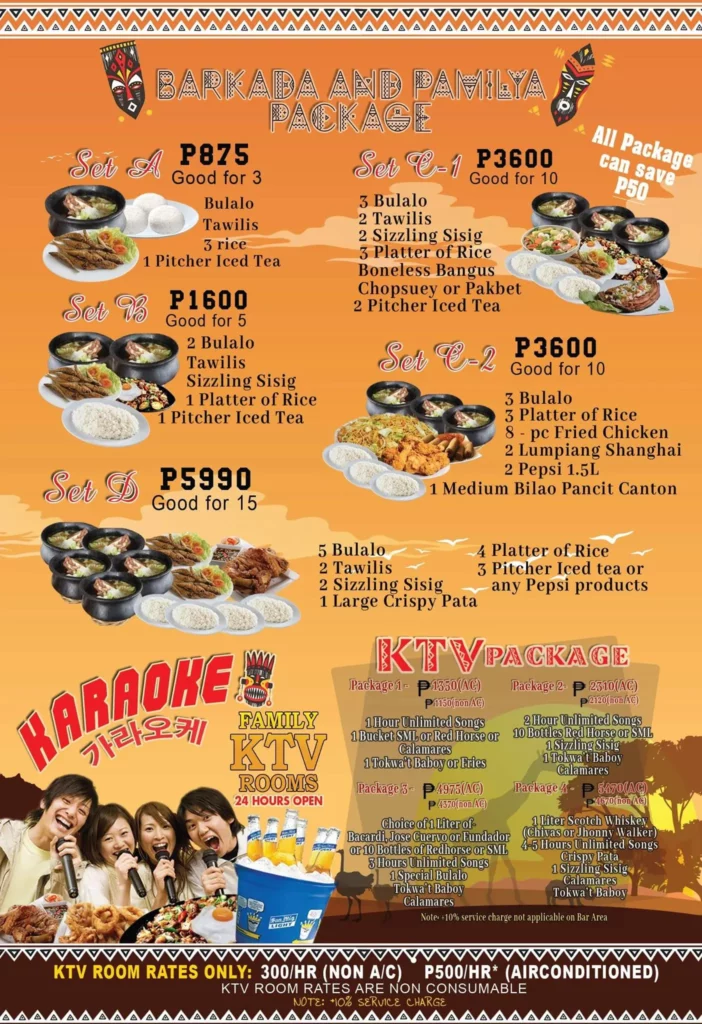
The most popular Barkada & Pamilya Package for medium groups — a curated set meal combining bulalo and side dishes for 4–6 people at a bundled price. The Barkada Package format is Bulalo Capital’s group-dining solution: rather than ordering individual bulalo bowls and sides separately and managing the math of a large table order, the Sets bundle everything into a single price. Set A (₱935) covers small groups, Set B (₱1,760) covers medium groups of 4–6, Set C-1 and C-2 (₱3,883 each) cover larger groups, and Set D (₱6,589) covers the largest gatherings. Set B is the most commonly ordered package for a typical barkada of 4–5 people visiting Bulalo Capital on a weekend drive from Metro Manila.
⚠️
Is Bulalo Capital Philippines Halal?
No — Bulalo Capital Philippines is not Halal Certified. The menu includes pork items (Crispy Pata, Pork Adobo, Lechon Kawali, Tokwat Baboy, Baby Backribs, Liempo) and alcoholic beverages (Beer, Whiskey). Muslim diners are advised to verify with the specific branch before ordering.
About Bulalo Capital Philippines
Bulalo Capital is a Filipino casual dining restaurant built around the most iconic dish of Tagaytay and Batangas — Bulalo. The restaurant’s name reflects its positioning: not just a restaurant that serves bulalo, but a destination that treats bulalo as the central organizing principle of its entire menu. The Kadalasang Order section alone offers 14 bulalo variants, applying every major Filipino cooking tradition to the beef shank and bone marrow format: clear broth (Home Style), sour tamarind (Sinigang), tamarind leaves (Sinampalukan), peanut sauce (Kare Kare), coconut milk (Ginataang), adobo marinade, kaldereta tomato sauce, and the Signature section’s Dragon, Sizzling, Kimchi, and Bulalong Tagaytay variants.
Beyond bulalo, the menu is a comprehensive Filipino casual dining offering: Fried Capital (Crispy Pata, Fried Lapulapu, Calamares), Inihaw Capital (grilled seafood and barbecue), Sabaw Capital (Sinigang and Tinola for non-bulalo soup orders), Sisig Capital (three sisig variants named after Tagaytay landmarks), Kinilaw Capital (fresh raw fish preparations), and supporting sections covering Steak, Adobo, Seafood, Ginata, and Vegetables. The Barkada & Pamilya Packages (Set A at ₱935 to Set D at ₱6,589) make group dining structured and straightforward.
Bulalo Capital’s positioning as a bulalo-specialist destination rather than a generic Filipino restaurant creates a clear identity: the restaurant is for the group that specifically wants bulalo as the centerpiece of the meal, supplemented by the full range of Filipino dishes that surround a bulalo-focused spread. The Tagaytay association is deliberate — bulalo is climatically tied to Tagaytay’s cool weather in Filipino food culture.
❓ Frequently Asked Questions
Bulalo Capital is most famous for its 14+ bulalo variants: Home Style Bulalo (₱638), Dragon Bulalo (₱787), Kare Kare Bulalo (₱638), Sinampalukang Bulalo (₱611), Sinigang na Bulalo (₱528), Ginataang Bulalo (₱572), Kimchi Bulalo (₱440). Crispy Pata (₱638) is the most popular non-bulalo item. Barkada Packages from ₱935 (Set A) to ₱6,589 (Set D). Not Halal Certified.
Home Style (₱638) = classic clear rich bone marrow broth. Sinampalukang (₱611) = tamarind leaves for gentle herbal sourness — milder than Sinigang. Sinigang na Bulalo (₱528) = sharp tamarind pulp sourness. Kare Kare Bulalo (₱638) = peanut sauce base + bagoong. Ginataang Bulalo (₱572) = coconut milk base. Adobong Bulalo (₱605) = adobo marinade (vinegar + soy). Kalderetang Bulalo (₱638) = tomato-based. Dragon Bulalo (₱787) = spiciest. Kimchi Bulalo (₱440) = Korean-Filipino fusion. Sizzling Bulalo (₱638) = served on sizzling plate. Pang Masa (₱418) = most affordable entry-level variant.
Bulalo Capital offers 5 group packages: Set A (₱935) for small groups 2–3, Set B (₱1,760) for medium groups 4–6, Set C-1 and C-2 (₱3,883 each) for larger groups, Set D (₱6,589) for the largest gatherings. Packages bundle bulalo and side dishes into a single price — the most convenient format for group dining without individual ordering. Set B is the most commonly ordered for a standard barkada of 4–5.
Kinilaw is the Filipino ceviche — fresh raw fish cured in vinegar and/or calamansi juice, which “cooks” the proteins through acid rather than heat, similar to Latin American ceviche. Bulalo Capital serves 4 Kinilaw variants: Kinilawig Tanigue (₱418) — Spanish mackerel; Kinilawing Blue Marlin (₱352); Kinilawing Bangus (₱308); Kinilawing Pusit (₱297) — squid. Kinilaw is typically served as a pulutan (drinking food) alongside beer or as a starter before the main bulalo. The acid in the curing marinade (vinegar + calamansi) contrasts with the richness of the bulalo broth — making Kinilaw the natural starter for a bulalo group meal.
Bulalo Capital’s three Sisig variants are named after Tagaytay landmarks: Picnic Grove Sisig (₱242), People’s Park Sisig (₱244), and Taal Volcano Sisig (₱242). Sisig is a Pampanga-origin dish of chopped pork face and ears, seasoned with calamansi and chili, served sizzling on a cast iron plate — one of the Philippines’ most popular pulutan. The Taal Volcano name likely signals the spiciest variant (reflecting the volcano’s fiery nature). All three are served sizzling and are best ordered alongside beer from the Beverages Capital section.
Delivery availability varies by branch location. For the most current delivery options, branch addresses, and operating hours, check official Bulalo Capital Philippines social media channels. Note that Bulalo soup dishes are best enjoyed freshly served — the bone marrow is at its optimal temperature and consistency immediately after cooking. For delivery, Fried Capital items (Crispy Pata, Fried Chicken) and grilled Inihaw items transport better than soup-based orders.
Hi! I'm Julia Stevens, a 24-year-old Filipina who loves eating out and finding the best food deals across the Philippines. I cover restaurant menus and updated prices here on phmenu.net, from your favorite fastfood chains to hidden gems worth trying. Whether you're looking for a budget meal or something special, I've got you covered!