The Empress Dining Palace Philippines Menu Prices Updated 2025

✓ Updated Prices last updated May 2026 — sourced from official The Empress Dining Palace Philippines channels
The Empress Dining Palace Philippines Menu 2026
🏯 Premium Chinese Dining

The Empress Dining Palace Menu with Prices

8
Categories
Cantonese
+ Szechuan
₱220
Starts From
2026
Updated

Looking for the complete The Empress Dining Palace Philippines menu with prices? You’ve come to the right place. We’ve compiled the full 2026 The Empress Dining Palace menu with updated prices across all 8 categories — sourced directly from official The Empress Dining Palace Philippines channels.

The Empress Dining Palace is a premium Chinese restaurant offering both Cantonese and Szechuan cuisine — a rare dual-regional menu covering the two most distinct Chinese cooking traditions. The menu spans Roasting (Cha Shao Honey Pork, The Empress Selection at ₱2,178), Seafood Special (Sautéed Scallop & Broccoli ₱1,815, Baked Salted Egg Prawn ₱1,452), Dim Sum (9 varieties), Mains, Meat Galore, Rice & Noodles (Birthday Ee-Fu Noodles, Malay Hofan), Szechuan Dishes (Mapo Beancurd, Dan Dan Noodles), and Soup (The Emperor Superior Soup at ₱1,549).

Prices range from ₱220 (Dim Sum items) to ₱2,178 (The Empress Selection). Scroll down for the complete updated menu.

📋 Jump to The Empress Dining Palace Menu Category
🔥

The Empress Dining Palace Roasting Menu With Prices

Menu ItemsPrice
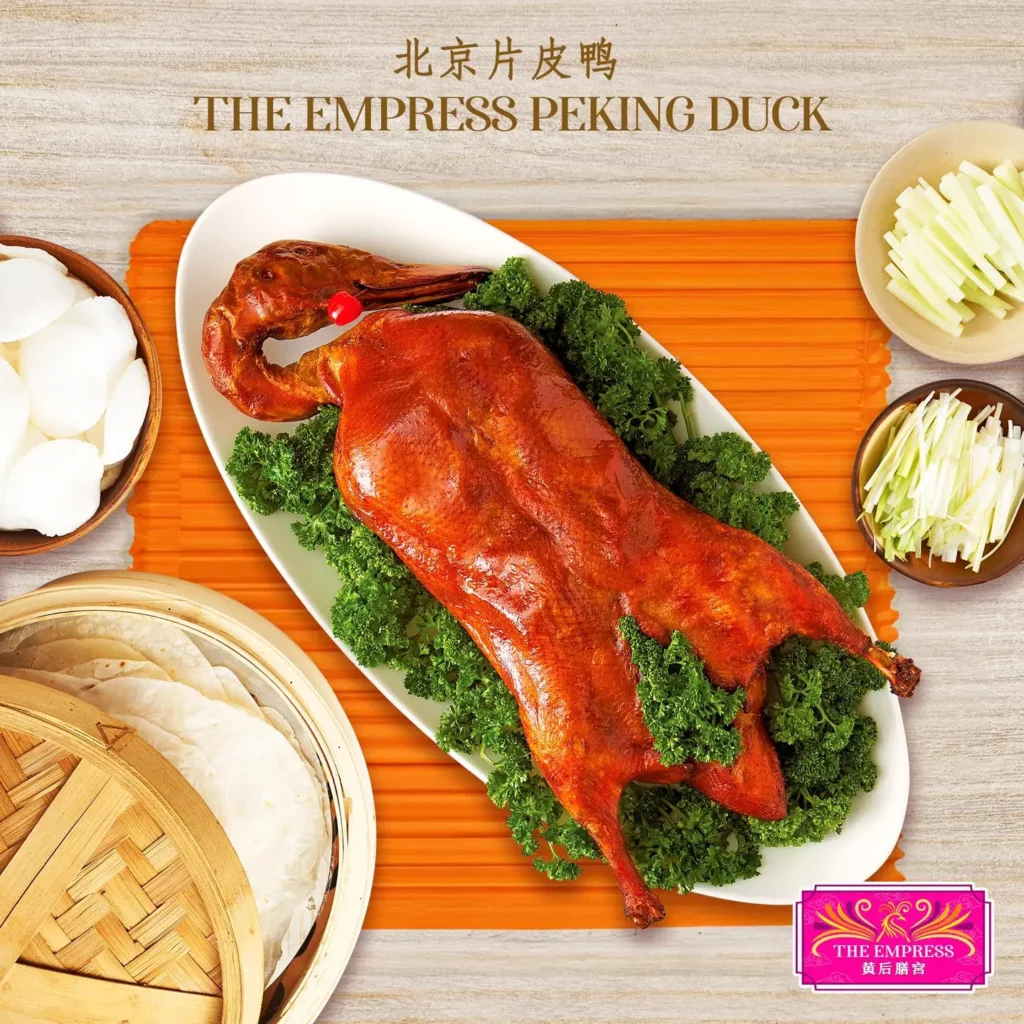
The Empress Selection₱ 2,178.00
Roasted Combination₱ 1,271.00
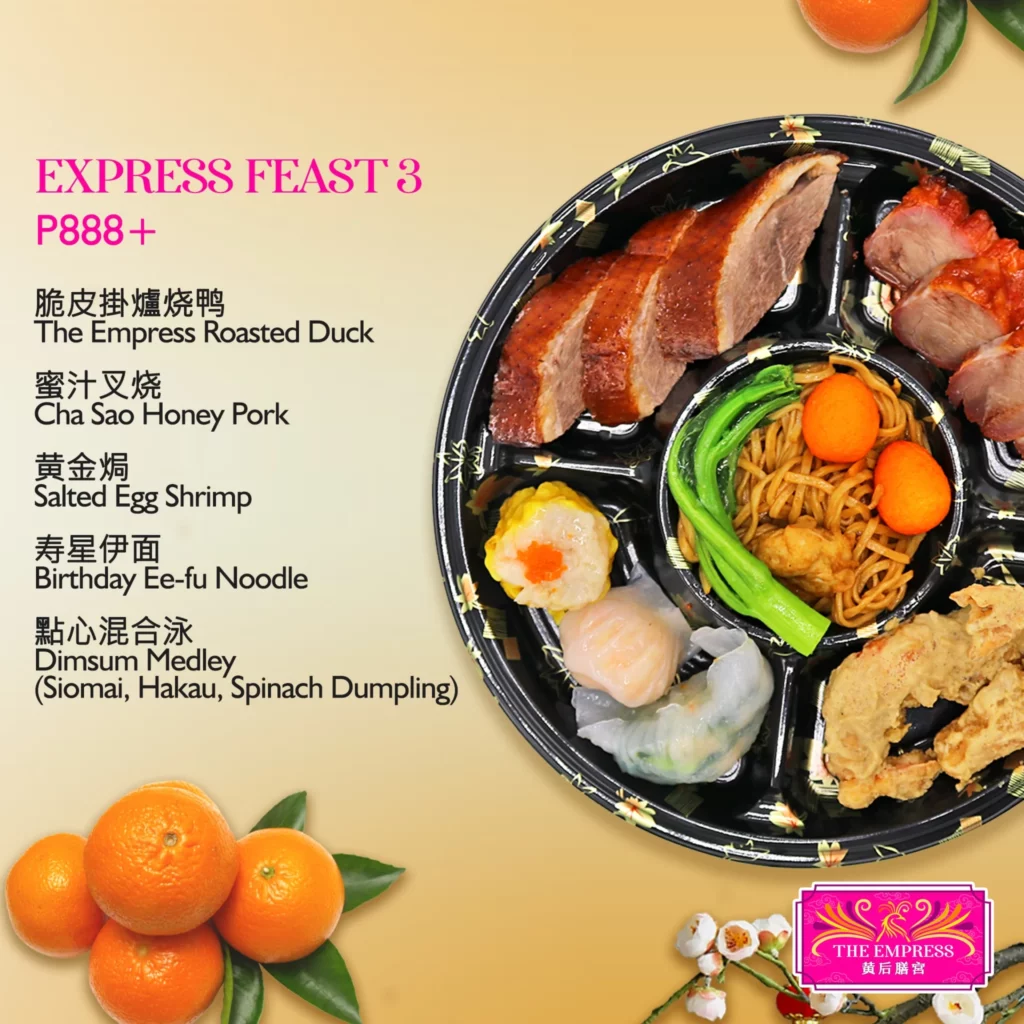
Cha Shao Honey Pork₱ 666.00
🦐

The Empress Dining Palace Seafood Special Prices

Menu ItemsPrice
Sautéed Scallop & Broccoli₱ 1,815.00
Crispy Prawn Fruit Salad₱ 1,452.00
Baked Salted Egg Prawn₱ 1,452.00
Sautéed Wasabi Prawns₱ 1,452.00
Pepper Salt Squid₱ 944.00
Braised Garoupa Fillet₱ 944.00
Egg Shrimp Conpoy & Pine Nut₱ 823.00
The Empress Dining Palace Menu
🍜

The Empress Dining Palace Mains Prices

Menu ItemsPrice
Signature Szechuan Dan Dan₱ 436.00
La Mian with Fresh Shrimp₱ 436.00
🥟

The Empress Dining Palace Dim Sum Menu Prices

Menu ItemsPrice
Baked Bolo BBQ Pork Bun₱ 339.00
Soupy Pork Dumpling₱ 303.00
Pork & Shrimp with Crab Roe₱ 291.00
Pork Rib in Black Bean Sauce₱ 291.00
Beancurd Skin with Oyster Sauce₱ 291.00
Shrimp Dumpling “Hakaw”₱ 279.00
Shrimp & Spinach Dumpling₱ 242.00
Chicken Feet with Special Sauce₱ 242.00
Pan Fried Carrot Cake₱ 242.00
The Empress Dining Palace Dim Sum
🥩

The Empress Dining Palace Meat Galore Prices

Menu ItemsPrice
3 Cups Beef with Basil Leaf₱ 1,114.00
Sautéed Black Pepper Beef Cubes₱ 1,114.00
Sautéed Beef with Broccoli & Capsicum₱ 787.00
Chicken with Chestnut & Mushroom₱ 738.00
Sweet & Sour Pork with Pineapple Chunks₱ 642.00
Sautéed Spicy Chicken Cubes with Mushroom₱ 581.00
🍚

The Empress Dining Palace Rice & Noodles Prices

Menu ItemsPrice
Curry Fried Rice with Assorted Seafood₱ 726.00
Malay Fried Rice Noodles “Hofan”₱ 690.00
Fried Rice with Diced Chicken & Salted Fish₱ 642.00
Birthday Ee-Fu Noodles₱ 617.00
Yang Zhou Fried Rice₱ 521.00

See Also: Takoyadon Menu

🌶️

The Empress Dining Palace Szechuan Dishes Prices

Menu ItemsPrice
Sweet & Sour Garoupa Fish Fillet₱ 1,065.00
Szechuan Mapo Beancurd₱ 509.00
The Empress Pork Belly in Special Sauce₱ 509.00
Sweet Eggplant with Minced Meat in Special Sauce₱ 460.00
🍲

The Empress Dining Palace Soup Prices

Menu ItemsPrice
The Emperor Superior Soup₱ 1,549.00
The Empress Soup₱ 1,065.00
Diced Wintermelon Seafood Soup₱ 824.00
Double Boiled Cabbage Soup₱ 460.00
Szechuan Hot & Sour Seafood Soup₱ 388.00

⭐ Our Favorite Items at The Empress Dining Palace Menu

Signature Szechuan Dan Dan
₱ 436.00
The most culturally significant noodle at The Empress — Dan Dan Mian (擔擔麵) is a Chengdu street food originally sold by vendors carrying the dish on a shoulder pole (dan dan = “carrying pole”). The sauce is one of the most complex in Chinese cuisine: ground pork cooked with Szechuan doubanjiang (fermented broad bean chili paste), sesame paste, soy sauce, black vinegar, Szechuan peppercorn, and chili oil — each ingredient contributing a distinct flavor layer. Szechuan peppercorn (huājiāo) is unique in global cuisine: it contains hydroxy-alpha-sanshool, a compound that produces a numbing, tingling sensation on the tongue (called má in Chinese) rather than heat — the “mala” (numb-spicy) sensation is the defining characteristic of all Szechuan cooking. Dan Dan at The Empress as a “Signature” item means it anchors the restaurant’s Szechuan identity on the menu.
Szechuan Mapo Beancurd
₱ 509.00
The most famous Szechuan dish in the world — Mapo Doufu (麻婆豆腐, “pockmarked old woman’s tofu”) was created in the 1860s in Chengdu by a woman with a pockmarked face (má = pockmarked, pó = old woman) who ran a small restaurant near a slaughterhouse. The dish: silken tofu cubed and braised in a sauce of ground beef, doubanjiang (chili bean paste), fermented black beans, garlic, ginger, and Szechuan peppercorn — finished with a generous amount of chili oil. The silken tofu’s extremely delicate, quivering texture (formed by coagulating soy milk with a minimum amount of coagulant) absorbs the intensely savory-spicy-numbing sauce. The mala sensation — má (numbing from peppercorn) + là (spicy from chili) — is the two-dimensional heat experience unique to Szechuan cuisine. At ₱509, the most iconic Chinese regional dish on the menu.
Baked Salted Egg Prawn
₱ 1,452.00
The most indulgent seafood at The Empress — Salted Egg Prawn coats fresh prawns in a sauce made from salted duck egg yolks, butter, curry leaves, and chili. Salted duck egg yolk (cured in brine or buried in salted charcoal for 30–40 days) has a fundamentally different flavor profile from fresh egg yolk: the curing process concentrates the fat and breaks down the protein structure, producing a grainy, intensely rich, subtly saline yolk with a deeper, more complex flavor than fresh egg. When the salted yolk is melted in butter and tossed with the prawns, it coats each piece in a golden, slightly gritty, intensely savory glaze. The curry leaves add an aromatic Southeast Asian note — this preparation is a Chinese-Malaysian hybrid dish that emerged from Singapore’s hawker culture and spread across premium Chinese restaurants in Southeast Asia. At ₱1,452, the most luxurious prawn preparation on the menu.
3 Cups Beef with Basil Leaf
₱ 1,114.00
The most aromatic meat dish at The Empress — San Bei (三杯, “Three Cups”) is a Taiwanese-Jiangxi cooking technique named for its three equal-measure liquid ingredients: one cup each of sesame oil, soy sauce, and rice wine (Shaoxing), plus fresh Thai basil leaves added at the end of cooking. The braising liquid reduces into a deeply savory, slightly sweet, intensely aromatic glaze — the sesame oil adds a nutty depth, the soy adds saltiness and color, and the Shaoxing wine adds acidity and complexity. The basil is added off-heat so it wilts from residual temperature without losing its volatile aromatic compounds to evaporation — a technique specifically designed to preserve the herb’s fragrance. Three Cups was originally a chicken dish (san bei ji) but The Empress applies the technique to beef — a more premium protein that creates a richer, more substantial version of the same aromatic sauce.
Malay Fried Rice Noodles “Hofan”
₱ 690.00
The most distinctly Southeast Asian dish at The Empress — Hofan (河粉, hé fěn = “river noodles”) are wide, flat, fresh rice noodles originally from Shahe village in Guangdong. The Malaysian style (char kway teow or equivalent Malay rice noodle preparations) introduces Southeast Asian flavors — dark soy sauce, shrimp paste, Chinese sausage, bean sprouts, and chili — into the Cantonese rice noodle format. The “wok hei” (鑊氣, “breath of the wok”) is especially critical for Hofan: the wide noodles must be cooked at extremely high heat for a very short time — they absorb the smoky, slightly charred wok flavor in seconds before becoming soggy. Hofan noodles have a much higher moisture content than dried noodles, making them soft, slightly slippery, and exceptionally good at carrying sauce. At ₱690, the most regionally diverse and most technically demanding noodle dish at The Empress.
The Emperor Superior Soup
₱ 1,549.00
The most prestigious dish at The Empress Dining Palace — “Superior Soup” (上湯, shàng tāng) in Chinese banquet cuisine refers to a master stock made by slow-simmering premium ingredients — typically a combination of whole chicken, pork bones, Jinhua ham, and dried seafood (scallops, fish maw) for 6–8 hours until all the collagen, gelatin, and flavor compounds have extracted into a clear, intensely concentrated golden broth. “Superior” signals the highest tier of Chinese restaurant soup stock — a designation in Chinese culinary tradition that separates basic stock (二湯) from superior stock (上湯). The Emperor designation (vs The Empress Soup at ₱1,065) indicates additional premium ingredients in the stock. In Chinese banquet culture, a high-quality soup is served as a mark of the host’s respect for guests — the more elaborate and expensive the soup, the higher the honor shown. At ₱1,549, the most ceremonially significant item on The Empress menu.
⚠️

Is The Empress Dining Palace Philippines Halal?

No — The Empress Dining Palace Philippines is not Halal Certified. The menu includes pork items across multiple sections (Cha Shao Honey Pork, Pork Rib in Black Bean Sauce, Sweet & Sour Pork, The Empress Pork Belly, Soupy Pork Dumpling, Pork & Shrimp Dumpling). Muslim diners are advised accordingly.

About The Empress Dining Palace Philippines

The Empress Dining Palace is a premium Chinese restaurant distinguished by its dual-regional menu — combining Cantonese cuisine (dim sum, roasting, seafood preparations, rice and noodle dishes) with Szechuan cuisine (Mapo Beancurd, Dan Dan Noodles, Hot & Sour Soup, mala-spiced preparations). These two Chinese culinary traditions are among the most distinct in all of Chinese cooking: Cantonese cuisine (from Guangdong province) is known for subtle seasoning, fresh ingredients, and precise steaming and roasting techniques; Szechuan cuisine (from Chengdu and Sichuan province) is defined by the bold mala (numbing-spicy) flavor profile produced by Szechuan peppercorn and chili.

The restaurant’s name positions it at the premium end of Chinese dining — “Empress” and “Emperor” vocabulary appears throughout the menu (The Empress Selection, The Emperor Superior Soup, The Empress Soup, The Empress Pork Belly), creating a consistent imperial Chinese aesthetic. This naming convention references the imperial court cuisine tradition of China, where the most elaborate and most expensive dishes were reserved for the Emperor and Empress.

The seafood section is particularly notable — Sautéed Scallop & Broccoli (₱1,815), Baked Salted Egg Prawn (₱1,452), and Sautéed Wasabi Prawns (₱1,452) are priced at a level that signals premium ingredient sourcing. The Egg Shrimp Conpoy & Pine Nut dish features conpoy (dried scallop), one of the most prized dried seafood ingredients in Chinese cuisine — dried scallops are made by boiling fresh scallops and air-drying them for weeks until the umami compounds concentrate to extraordinary intensity.

❓ Frequently Asked Questions
The Empress Dining Palace is known for premium Cantonese + Szechuan Chinese cuisine. Signature items: Signature Szechuan Dan Dan (₱436), Szechuan Mapo Beancurd (₱509), Baked Salted Egg Prawn (₱1,452), 3 Cups Beef with Basil (₱1,114), The Emperor Superior Soup (₱1,549), The Empress Selection roasting (₱2,178). Not Halal Certified. Facebook: empressdiningpalace.
Signature Szechuan Dan Dan (₱436) — Dan Dan Mian is a Chengdu street food originally carried by shoulder-pole vendors. Sauce: ground pork, doubanjiang (fermented chili bean paste), sesame paste, soy, black vinegar, chili oil, and Szechuan peppercorn. The Szechuan peppercorn produces the “mala” numbing-spicy sensation from hydroxy-alpha-sanshool compound — distinct from regular chili heat. The Empress’s “Signature” designation makes this the restaurant’s defining Szechuan item.
Szechuan Mapo Beancurd (₱509) — one of the most famous Chinese dishes globally. Created in 1860s Chengdu. Silken tofu braised in sauce of ground beef, doubanjiang, fermented black beans, Szechuan peppercorn, and chili oil. The mala (má = numbing peppercorn, là = spicy chili) two-dimensional heat is the defining Szechuan flavor experience. Silken tofu absorbs the intensely savory-spicy sauce. Must-order for anyone exploring Szechuan cuisine at The Empress.
The Emperor Superior Soup (₱1,549) is the more premium version — “Superior Soup” (上湯) is a Chinese culinary designation for master stock made from whole chicken, pork bones, Jinhua ham, and dried seafood simmered 6–8 hours. The “Emperor” tier indicates additional premium ingredients vs The Empress Soup (₱1,065). In Chinese banquet culture, expensive soup signals the host’s highest respect for guests. A ₱484 price difference between the two — worth ordering the Emperor version for celebratory or formal dinners.
Malay Fried Rice Noodles “Hofan” (₱690) — Hofan (河粉) are wide, flat, fresh rice noodles from Guangdong, prepared Malay-style with dark soy sauce, shrimp paste, and Southeast Asian aromatics. High moisture content = soft, slippery texture exceptional for absorbing sauce. Wok hei (high-heat smoky char) is critical — noodles cook in seconds at maximum flame. The most regionally diverse dish on The Empress menu, bridging Cantonese and Malay food cultures.
For current branch locations, operating hours, and reservations, visit their Facebook page at facebook.com/empressdiningpalace. Reservations recommended for group dining — especially when ordering The Empress Selection (₱2,178) or The Emperor Superior Soup (₱1,549) which may require advance notice. Not Halal Certified — pork items throughout the menu.

Official Sources


Ready to Find Your Next Favorite Restaurant?

500+ restaurants. 8 cuisines. Always updated. Always free.

Kain na! 🇵🇭

Scroll to Top