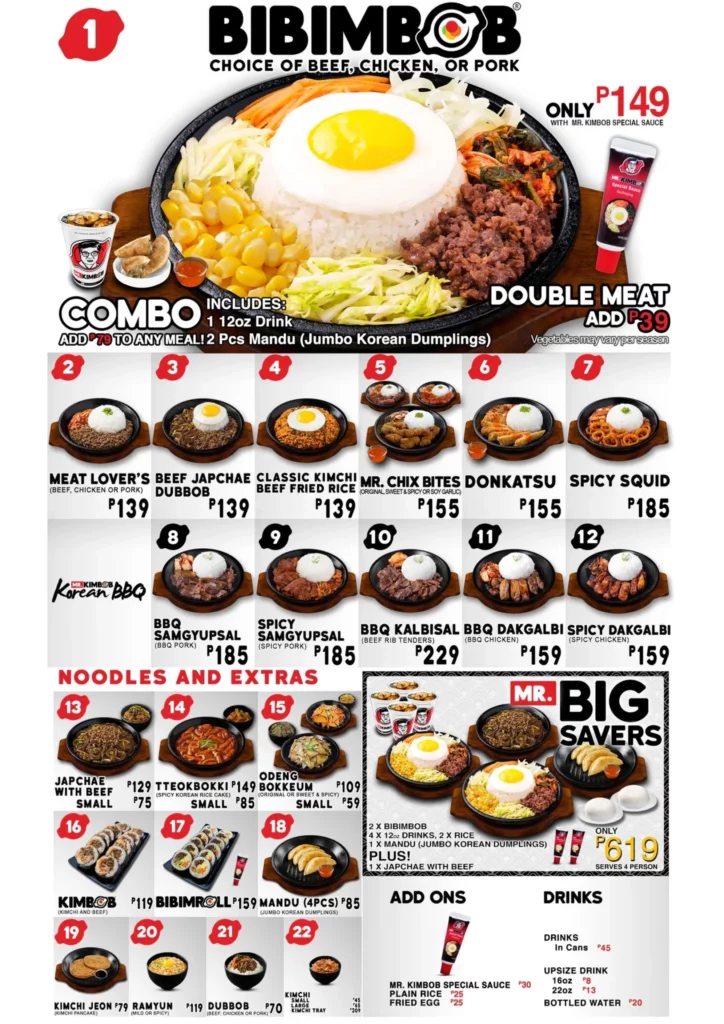
Mr. Kimbob Philippines Menu Prices Updated 2026

✓ Updated Prices last updated May 2026 — sourced from official Mr. Kimbob Philippines channels
Mr. Kimbob Philippines Menu 2026
🇰🇷 Korean Casual Dining

Mr. Kimbob Menu with Prices

4
Categories
₱59
Starts From
Korean
+ Japanese
2026
Updated

Looking for the complete Mr. Kimbob Philippines menu with prices? You’ve come to the right place. We’ve compiled the full 2026 Mr. Kimbob menu with updated prices across all 4 categories — sourced directly from official Mr. Kimbob Philippines channels.

Mr. Kimbob is a Philippine Korean casual dining restaurant built around affordable Korean rice rolls (kimbob), bibimbob, ramyun, katsu, and Korean staples — covering the full range of everyday Korean food at prices that make Korean dining accessible without requiring a premium Korean restaurant budget. With dishes starting from ₱67 (Nara-Myun) and most mains under ₱270, Mr. Kimbob is the go-to for students, young professionals, and K-food fans who want authentic Korean flavors daily.

The menu spans 4 sections: Maki & Kimbob (Korean rice rolls and maki variations), Main (bibimbob, katsu, jjigae, dupbap, tteokbokki), Noodles (ramyun, japchae), and Add-ons. Scroll down for the complete updated menu.

📋 Jump to Mr. Kimbob Menu Category
🇰🇷

Mr. Kimbob Korean Menu Guide

Kimbob (김밥) = Korean rice roll — rice + fillings rolled in seaweed (gim), sliced into rounds; simpler and lighter than Japanese maki, no raw fish, traditionally eaten as a picnic/lunchbox food in Korea. Bibimbob (비빔밥) = “mixed rice” — rice + vegetables + protein + gochujang sauce, mixed together before eating. Dupbap (덮밥) = rice topped with a protein and sauce. Jjajang Rice = rice with black bean sauce (Korean-Chinese fusion dish, one of Korea’s most popular comfort foods). Kimchi Jjigae (김치찌개) = kimchi stew — fermented cabbage cooked into a rich, spicy, sour stew. Tteokbokki (떡볶이) = rice cakes in spicy gochujang sauce, Korea’s most popular street food. Japchae (잡채) = stir-fried glass noodles with vegetables. Ramyun (라면) = Korean instant-style ramen. Bossam = boiled pork belly wrapped in leafy vegetables. Odeng = Korean fish cake.

🍱

Mr. Kimbob Maki & Kimbob Menu With Prices

Menu ItemsPrice
Californian₱ 156.00
Kimchi-Cheese Maki₱ 156.00
Cheese Maki₱ 145.00
Dragon Maki₱ 145.00
Spicy Tuna Maki₱ 145.00
Fire Odeng Maki₱ 151.00
Beef Kimbob₱ 84.00
Tuna Kimbob₱ 78.00
Seoul Kimbob₱ 74.00
🍳

Mr. Kimbob Main Prices

Menu ItemsPrice
Bossam Full Set₱ 266.00
Tonkatsu Combo₱ 266.00
Cordon Bleu₱ 266.00
Cheese Tteokbokki₱ 266.00
Samgyupsal Full Set₱ 254.00
Kimchi Nabe Katsu₱ 254.00
Tonkatsu Bibimbob₱ 225.00
Katsu Curry₱ 224.00
Katsudon₱ 214.00
Giant Katsu₱ 214.00
Bulgogi Dupbap₱ 214.00
Beef Bibimbob₱ 209.00
Spicy Pork Dupbap₱ 202.00
Soon-Dak₱ 202.00
Bacon Bibimbob₱ 198.00
Kimchi Jjigae₱ 198.00
Cheese Bibimbob₱ 198.00
Curry Rice₱ 175.00
Jjajang Rice₱ 164.00
Spam & Egg₱ 107.00
Mr. Kimbob Menu Philippines
🍜

Mr. Kimbob Noodle Menu Prices

Menu ItemsPrice
Seafood Ramyun₱ 191.00
Japanese Premium Ramyun₱ 157.00
Smoky Pork Ramyun₱ 146.00
Japchae₱ 101.00
Cheese Ramyun₱ 135.00
Rice Cake Ramyun₱ 135.00
Nara-Myun₱ 67.00

See Also: Figaro Coffee Menu

Mr. Kimbob Add-ons Prices

Menu ItemsPrice
Jar of Kimchi₱ 113.00
Plain Rice Platter₱ 45.00
⭐ Our Favorite Items at Mr. Kimbob Menu
Beef Kimbob
₱ 84.00
The dish that gives Mr. Kimbob its name — a Korean rice roll (김밥, gimbap) with beef, vegetables, and egg rolled in seasoned rice and dried seaweed (gim), then sliced into rounds. Kimbob is the Korean lunchbox staple: portable, complete, and filling. Unlike Japanese maki, Kimbob does not use raw fish or Japanese rice seasoning — the rice is seasoned with sesame oil and salt, and the fillings are cooked or pickled. At ₱84, the most affordable complete Korean food item at Mr. Kimbob and the one that most first-time visitors try to understand what the restaurant is built around.
Kimchi Jjigae
₱ 198.00
Korea’s most beloved home-cooked stew — aged, well-fermented kimchi simmered with pork and tofu in a rich, spicy, deeply sour broth. Kimchi Jjigae is the dish most Koreans consider the ultimate comfort food: the older and more fermented the kimchi used, the deeper and more complex the stew. The sour-spicy-savory combination of the kimchi broth with the richness of pork and the softness of tofu is irreplaceable. At ₱198, the most authentically Korean item on the Mr. Kimbob main menu and the order for anyone who wants to taste everyday Korean home cooking.
Jjajang Rice
₱ 164.00
One of Korea’s most beloved comfort foods — rice topped with jjajangmyeon sauce (black bean paste cooked with pork and vegetables), a Korean-Chinese fusion dish brought to Korea by Chinese immigrants in the early 20th century. In Korea, Jjajang (짜장) is so culturally embedded that April 14 is “Black Day” — the day singles who didn’t receive Valentine’s Day gifts eat jjajang noodles in solidarity. At Mr. Kimbob, served over rice rather than noodles. At ₱164, one of the most culturally specific and most affordable main dishes on the menu.
Cheese Tteokbokki
₱ 266.00
The most popular Korean street food in a premium format — cylindrical rice cakes (tteok) in a spicy gochujang-based sauce, topped with melted cheese. The cheese addition is a modern Korean street food evolution: the creaminess of the melted cheese reduces the heat of the gochujang sauce while adding a savory richness that makes the dish more filling. Tteokbokki (떡볶이) is Korea’s most recognized street food globally, and the Cheese variant is the version that has driven the most cross-cultural adoption. At ₱266, the most indulgent item in the Mr. Kimbob Main section.
Bulgogi Dupbap
₱ 214.00
A complete Korean rice bowl — steamed rice topped with bulgogi (불고기, thinly sliced beef marinated in soy sauce, pear juice, sesame oil, garlic, and sugar, then grilled or pan-fried). Bulgogi is one of the most internationally recognized Korean dishes — the pear or apple juice in the marinade acts as a natural tenderizer, producing beef that is noticeably softer than standard stir-fried beef. The Dupbap format (bowl with protein on top of rice) makes it the most practical and filling single-portion meal at Mr. Kimbob. At ₱214, the best bulgogi experience in the budget Korean dining format.
Kimchi-Cheese Maki
₱ 156.00
The most creative item in the Maki & Kimbob section — Korean kimchi (fermented cabbage) and cheese combined in a Japanese maki roll format. The Kimchi-Cheese Maki is a Korean-Japanese fusion that works because the sourness and spice of the kimchi and the creaminess of the cheese follow the same flavor logic as the Cheese Tteokbokki: complementary contrast. At ₱156, it is one of the highest-priced maki items and the one that most reflects Mr. Kimbob’s creative approach to combining Korean ingredients with Japanese rice roll formats.
⚠️

Is Mr. Kimbob Philippines Halal?

No — Mr. Kimbob Philippines is not Halal Certified. The menu contains pork across multiple items — Samgyupsal Full Set (pork belly), Bossam Full Set (boiled pork), Spicy Pork Dupbap, Smoky Pork Ramyun, Bacon Bibimbob, and Kimchi Jjigae (traditionally pork-based). The Spam & Egg item also contains pork-based Spam. Muslim customers are advised that pork is present across several sections of the menu.

About Mr. Kimbob Philippines

Mr. Kimbob is a Philippine Korean casual dining restaurant that takes its name from kimbob (김밥) — the Korean rice roll that is the most everyday, most portable, and most democratic of all Korean foods. In Korea, kimbob is what you bring to a school field trip, pack for a hiking lunch, or buy from a street stall between meals. By naming the restaurant after this humble dish, Mr. Kimbob signals its identity: accessible Korean food for everyday Filipino diners, not premium Korean barbecue dining for special occasions.

The menu reflects this positioning across all four sections. The Kimbob items (₱74–₱84) are the most affordable Korean food available at any restaurant format. The Main section covers the full range of Korean everyday dining — bibimbob, katsu, jjigae, dupbap, tteokbokki — at prices that make Korean food a practical daily choice rather than a special occasion expense. The Noodle section adds ramyun variants and japchae. The menu also includes Japanese-influenced items (Katsudon, Tonkatsu, Cordon Bleu, Japanese Premium Ramyun) reflecting the natural overlap between Korean and Japanese casual dining preferences in the Philippine market.

The Add-ons section — Jar of Kimchi (₱113) and Plain Rice Platter (₱45) — is a signal of Mr. Kimbob’s commitment to the Korean dining culture of kimchi as a constant table presence: the ability to buy a jar of kimchi to take home reflects the same philosophy as the restaurant name, treating Korean food staples as everyday items rather than premium specialties.

❓ Frequently Asked Questions
Mr. Kimbob Philippines is most famous for its affordable Korean rice rolls — Seoul Kimbob (₱74), Tuna Kimbob (₱78), and Beef Kimbob (₱84) — and its Korean main dishes including Kimchi Jjigae (₱198), Bulgogi Dupbap (₱214), Cheese Tteokbokki (₱266), Beef Bibimbob (₱209), and Jjajang Rice (₱164). The Kimchi-Cheese Maki (₱156) is the most creative fusion item. The Nara-Myun (₱67) is the most affordable noodle option. Mr. Kimbob is recognized as one of the most accessible budget Korean casual dining restaurants in the Philippines.
Two different rice roll traditions: Kimbob (김밥, ₱74–₱84) is Korean — seasoned rice (sesame oil + salt) rolled with cooked or pickled fillings (beef, tuna, vegetables, egg) in dried seaweed, sliced into rounds. No raw fish, no vinegared rice. Originally a Korean lunchbox/picnic food. Simpler, lighter, more portable. Maki (₱145–₱156) is Japanese-inspired — vinegared rice with fillings including cured or seasoned proteins, often with Japanese-influenced sauces or ingredients (California roll style, spicy tuna). Mr. Kimbob’s Maki section uses Korean flavor twists (Kimchi-Cheese Maki, Fire Odeng Maki) making them Korean-Japanese fusion items.
Jjajang Rice (₱164) is rice topped with jjajang sauce — a thick, savory black bean paste (chunjang) cooked with pork and diced vegetables. It is the rice version of jjajangmyeon (짜장면), one of Korea’s most beloved comfort foods brought by Chinese immigrants in the early 1900s. In Korea, jjajangmyeon is so culturally significant that delivery platforms report it as one of the most ordered dishes nationwide. “Black Day” on April 14 is an unofficial Korean holiday where singles eat jjajang-based dishes. At Mr. Kimbob, served over rice rather than noodles — the more accessible format for everyday dining at ₱164.
Bibimbob (비빔밥, “mixed rice”) is a Korean dish of steamed rice served with assorted vegetables (namul), protein, and gochujang (red chili paste), all mixed together at the table before eating. The mixing is essential — “bibim” means to mix. At Mr. Kimbob, Bibimbob is available in 4 variants: Beef Bibimbob (₱209), Tonkatsu Bibimbob (₱225 — with Japanese-style breaded pork), Bacon Bibimbob (₱198), and Cheese Bibimbob (₱198). Each variant changes the protein while keeping the bibimbob format of mixed rice + vegetables + sauce. Beef Bibimbob is the most traditional version; Tonkatsu Bibimbob is the most creative fusion.
The most affordable items at Mr. Kimbob Philippines: Plain Rice Platter (₱45 add-on), Nara-Myun (₱67 — the most affordable noodle), Seoul Kimbob (₱74 — the most affordable complete Korean rice roll), Tuna Kimbob (₱78), Beef Kimbob (₱84). The Nara-Myun at ₱67 is the single most affordable menu item that functions as a standalone meal. The Kimbob items (₱74–₱84) are the most affordable complete Korean food experience available at any restaurant in the Philippines. Spam & Egg (₱107) is the most affordable Main section item.
Yes! Mr. Kimbob Philippines is available for delivery through GrabFood and Foodpanda at select branch locations. For the most current branch locations and operating hours, check their official Facebook page at facebook.com/mrkimbobph. Note that Kimbob rice rolls transport well for delivery — they maintain their texture and freshness better than most hot dishes. The ramyun and Kimchi Jjigae are best consumed immediately after preparation for optimal broth temperature and noodle texture.

Official Sources


Ready to Find Your Next Favorite Restaurant?

500+ restaurants. 8 cuisines. Always updated. Always free.

Kain na! 🇵🇭

Scroll to Top